Mobile Scaffolds and LVL Timber: What Builders Should Know Before Choosing a Work Platform
Choosing a work platform is not just a matter of height and price. On a real construction site, builders also need to think about platform


1.8M NARROW ALUMINIUM MOBILE SCAFFOLD TOWER (PLATFORM HEIGHT)

3M LONG ALUMINIUM MOBILE SCAFFOLD TOWER (PLATFORM HEIGHT)

4M LONG ALUMINIUM MOBILE SCAFFOLD TOWER (PLATFORM HEIGHT)

4M DOUBLE ALUMINIUM MOBILE SCAFFOLD TOWER (PLATFORM HEIGHT)

Brace

Standard

Truss Transom

Transom

LVL Timber-150*77mm Beam

LVL Timber-95*65mm Joist Beam

Scaffolding and formwork both play important roles on a work site, yet they serve very different purposes. Many teams use both systems on the same project, and the best outcomes come when people understand how each structure behaves, how it supports the work sequence, and how materials influence the strength of the temporary setup. At GW Equip, these questions are common among builders seeking a dependable approach to safe access and predictable concrete shaping. This article breaks down the differences directly and practically that suit daily construction tasks.
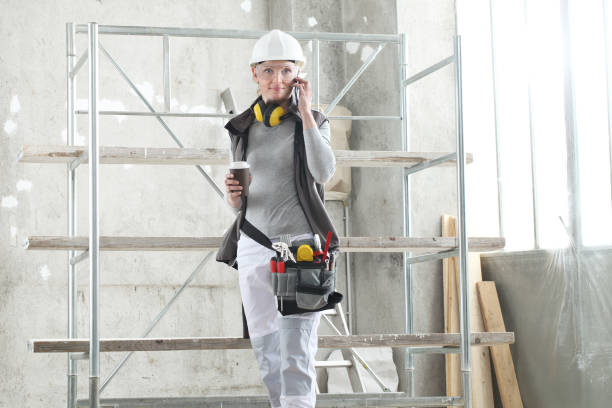
Scaffolding provides access. A structure is created. The entire aim is to support people, tools, and light materials. Systems like Kwikstage scaffolding allow teams to work at height with confidence because the setup creates a steady platform that does not shift when weight moves across it.
A key trait of scaffolding is that it must cope with constant movement. Workers climb, pass tools, and handle tasks that apply sudden loads. A safe scaffold distributes these shifting forces through standards, ledgers, and a well-placed timber plank system. Every contact point matters because human movement is rarely even.
Another difference is flexibility. Scaffolding is often moved, lifted or extended as the build evolves. A system such as Kwikstage scaffolding can adapt quickly because its modular nature lets teams add bays, adjust heights or alter the footprint with minimal delay. This principle also aligns with public space requirements found in resources, such as those that help teams understand how access structures must function safely in shared environments.
Painters, installers, bricklayers, and mechanical workers may all stand on the same platform. This demands predictable strength across every plank and joint. The scaffold becomes a shared workspace rather than a structure with a single purpose.
Formwork creates shape. It holds concrete in place until the mix cures and becomes strong enough to support itself. The focus is not movement but containment. The walls of the form must resist strong and consistent pressure from wet concrete, which pushes outward in every direction.
Formwork behaves like a mould. The pressure of concrete requires panels, frames, and supports that do not bow or shift. Materials such as lvl timber are often chosen because they maintain shape under load and handle moisture changes better than ordinary timber. Every joint must lock firmly because once the pour begins, there is no room for structural weakness.
Unlike scaffolding, formwork directly affects the outcome of the build. Any misalignment or bulge will show in the finished concrete surface. The goal is precision. A well-built form gives clean angles, accurate dimensions, and consistent quality across the slab, wall, or column.
While scaffolding moves often, formwork stays in place from the start of reinforcement work until stripping. It is built for stillness. During this period, it must carry heavy loads without any movement, which makes the sequence of assembly and checking essential.

Understanding the difference between scaffolding and formwork helps teams decide what system fits each activity. Both may appear similar because they use frames and planks, yet their behaviour is completely different, and mixing the two in the wrong way can be unsafe.
Good performance starts with good material. A strong timber plank gives a reliable footing on a scaffold. Lvl timber provides predictable support for formwork frames because laminated layers distribute load more evenly. Builders who try to reduce cost with low-grade materials often face deflection problems, loose joints, and greater inspection failures. The simplest path is choosing materials that can handle daily stress without losing shape.
Many sites run both operations side by side. Formwork crews build the mould for concrete while scaffold crews set up platforms so the team can reach the upper sections. A clear work sequence prevents clashes. Workers need space to strip forms or extend platforms, and planning around this reduces delays and safety risks. Communication around load limits, pour timing, and dismantling steps ensures each structure supports the next phase without disruption.
Temporary structures may not stay on site for long, but their impact is significant. A scaffold that feels firm underfoot increases productivity. A form that stays true during pouring protects both time and budget. That is why builders rely on GW Equip. Having consistent quality across frames, wedges, planks, and timber sections removes uncertainty from daily tasks and allows teams to focus on workmanship.
When the task involves reaching a height or supporting trades, scaffolding is the correct choice. When the task involves shaping and containing concrete, formwork is required. Each has its own rules, materials, and inspection needs. The most efficient projects are those where crews understand that these systems are not interchangeable and treat them as separate yet complementary tools.
Update time:
Choosing a work platform is not just a matter of height and price. On a real construction site, builders also need to think about platform

When people buy scaffolding, they often focus on the main frame first: standards, ledgers, transoms and braces. The smaller components get added later. That is

Buying an aluminium scaffold tower can look straightforward. Pick a platform height, compare a few prices, check whether it fits through a doorway, and order
Choosing between aluminium and steel scaffolding is not simply a question of which material is stronger. On an Australian worksite, the better choice depends on
Modular construction is often described as a faster alternative to conventional building. Walls, floors, bathrooms or complete rooms can be manufactured away from the project,