Why this guide (and who it’s for)
This is the practical take you look for when searching “timber plank” for scaffolds. You want to know what actually works on site, what inspectors look for, and which specs matter so your deck stays safe and productive. Below, we’ll stick to plain English, pull in verified requirements from Australia’s current Scaffolding Code of Practice, and translate those into easy buying choices and setup habits.
Fast decisions first: when a timber plank is the right call
Using a timber plank on a working platform still makes sense when you need predictable grip underfoot, easy inspection for damage, and straightforward replacement. On mainstream modular systems, choose graded, uniform‑thickness planks that meet the plank standard and the scaffold code, and then lock them in so they can’t lift in wind or day‑to‑day use.
What matters on site (and why)
Duty & loadings. Your platform duty and bay loading drive every other choice. Don’t just look at a plank’s marketing label—check the system design and the number of working platforms your scaffold is carrying at a time.
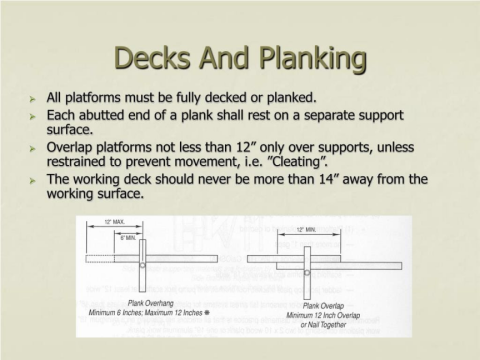
Span, overhang & gaps. Keep spans within the designer’s spec; set overhang correctly; and control gaps between planks so people, tools and debris don’t drop through. The Code states that no single gap between planks should exceed 25 mm and the total gap across all planks shouldn’t exceed 50 mm—tight tolerances that reduce trip and drop hazards.
Surface & thickness. A “slip‑resistant” top surface with truly uniform thickness keeps the deck level and reduces toe‑catch edges.
Uplift control. Make planks captive so they can’t be kicked off or displaced during normal use—especially important in exposed or windy areas.
Buying tips (avoid these five common mistakes)
1) Buying by price alone. Cheap timber can hide defects you only see after loading. Look for compliance to the plank standard and insist on supplier documentation.
2) Wrong size or mixed thickness. A deck built from uneven thickness creates toe‑catch hazards and makes toe‑board fit‑up messy.
3) Ignoring gap control. Plan deck width so gaps stay within limits. Where bays leave gaps under 500 mm, use plywood infill that’s at least 17 mm thick—and secure it properly.
4) Not fixing planks. Planks should be secured/captive. If you’re in cyclone‑prone regions, securing against uplift isn’t optional.
5) No rotation or inspection routine. Discard cracked or split planks immediately; store dry; and mark out a routine inspection frequency that aligns with site risk.
Real‑world setups with modular systems
Most crews mixing modular frames and decks will pair timber with steel transoms for a quick, full‑width platform. If you’re building out bays with timber plank on Kwikstage or similar, keep things consistent: uniform thickness across the run, gaps controlled, and planks fixed per the plan. For graded, engineered options, a lvl scaffold plank offers predictable strength‑to‑weight and clean edges. And if you’re expanding a system, browse the broader Kwikstage Scaffolding range to match ledgers, transoms and braces.
Compliance snapshot (the parts inspectors check first)
- Plank compliance & surface — Planks that meet AS 1577, with a slip‑resistant surface, uniform thickness, and no splits or cracks.
• Captive & fixed — Planks secured so they cannot be kicked off or displaced during normal use.
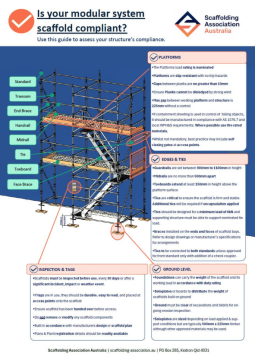
• Gaps & overhang — Control deck gaps (≤25 mm between any two planks; ≤50 mm total across the bay). Set overhang per design; avoid uplift.
• Plywood infill — Where used for sub‑500 mm gaps, use ≥17 mm thick sheets, fixed correctly.
These points come straight from the current Queensland Scaffolding Code of Practice 2021and align with national WHS duties.
What changes on site when you get planks right
Crews move faster on level, grippy decks. Tools stay where you put them. Less time is lost to re‑decking and fewer call‑backs come from inspectors. Most importantly, you cut the risk of falls from heights and falling objects—still a major enforcement focus in Australia—by controlling gaps and uplift, and sticking to the inspection cycle.
How to choose from GW Equip (small, durable kit that just works)
Start with your base platform set, then add a balanced set of replacements for attrition. Browse our curated timber plank category for matched thickness runs. If weight and consistency are priorities, shortlist an engineered LVL option — and remember to keep spare planks tagged and stored flat, off the ground.
Quick checks before handover
- Are all planks compliant and in good condition?No cracks, splits, delam, or damage at ends.
- Are planks fixed/captive?Especially important around perimeters and in exposed conditions.
- Are gaps controlled? Verify measurements across the run and at corners.
- Is any plywood infill thick enough and secured?Keep it ≥17 mm where used.
- Are access and egress sorted?For taller perimeter scaffolds, plan stairs or ladders early so you’ve got at least two safe ways on/off the deck.
Ready to deck out your scaffold?
Explore GW Equip’s matched‑thickness timber plank options for fast, compliant platforms. Prefer engineered timber? Check our lvl scaffold plank. Building out a full system? You’ll find compatible ledgers, transoms and more in Kwikstage Scaffolding.